Curiosity Is the Craft
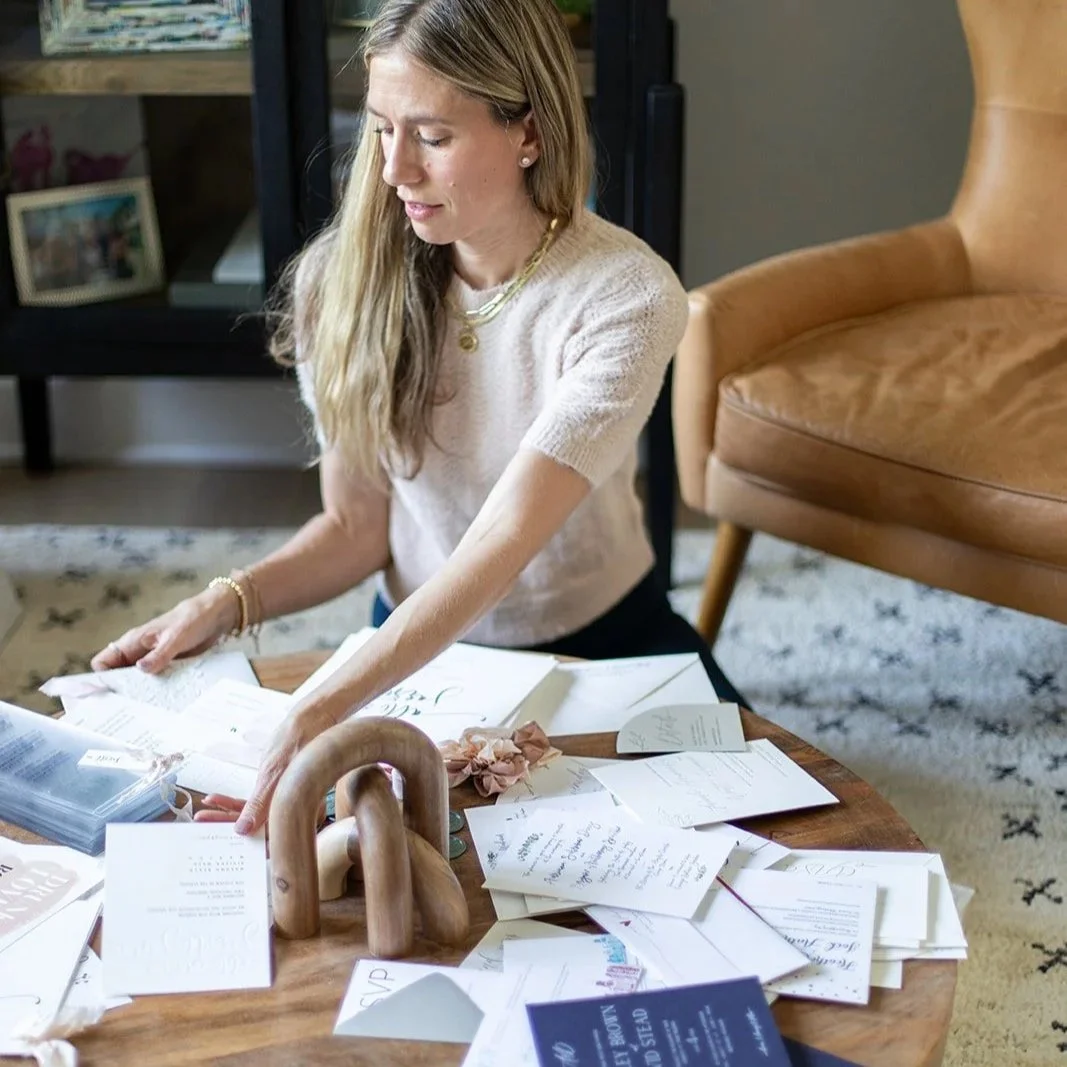
The questions aren't there to make the work better. They're there to tell you the truth — sometimes the truth that this one isn't yours to make.
Years ago, when I was just starting out as a wedding stationery designer, a bride sent me a screenshot.
We'd been going back and forth for weeks. I'd send her an elegant, custom concept — something built around her, meant to look like no one else's. She'd send it back: not quite. Another. Not quite. Then she sent me the thing she actually wanted: a wedding invitation from a template site, a mass-market design, the kind I'd never in my life reach for. Not inspired by. Not in the spirit of. That one. "I want this," she wrote. "From this site."
I felt the small sinking feeling that tells you something's off — and instead of listening to it, I kept going. More concepts. More nudging her toward something with a little more soul. Because I wanted the work. I was early in my career, hungry, and I wanted to be chosen.
Here's what should have ended it in week one: she didn't want a design. She wanted a look she'd already found and loved, made hers — which is a completely fair thing to want. It just isn't what I make; I start from a blank page. She wasn't the wrong bride, she was the wrong bride for me, and the whole misfire came down to one thing — I never asked her a single real question about herself. Not what drew her, not what she pictured, not why. One honest conversation and I'd have known, that first week, that we wanted opposite things.
That conversation is the thing I now believe is the actual craft — and it's almost nothing like "design." Curiosity isn't there to make the work better. It's there to tell you the truth: about who someone is, about what they really want underneath what they asked for, and sometimes about whether you should be the one making it at all.
Here's the part nobody admits, though. That kind of curiosity is bad for business. Get genuinely curious and you might find out you're not a fit — and then you have to walk away from work you wanted. So the eager version of you talks over the curious version, skips the conversation, and goes straight to making. I've come to think that's the real reason so much of the work in the world is competent and completely forgettable. Not a shortage of talent. A room full of people who wanted the job more than they wanted the truth.
None of this means the brief doesn't matter — you need it. But a brief only tells you the surface: what someone thinks they want. It can't tell you who they are, or whether the thing they're describing is the thing you're built to make. Only the real conversation does that — the un-agenda'd one, where you stop performing "designer taking notes" and actually get interested in the person in front of you. The brief gets you the spec. The conversation gets you the truth.
Sometimes the honest answers end a project before it starts, and that used to feel like losing the work. It isn't. It's the questions doing the one thing they're for — telling me the truth, including, sometimes, that this one isn't mine to make.
